As you stroll through the lush gardens of Merusaka or explore the streets of Bali, you will spot it everywhere. It’s wrapped around majestic Banyan trees, draped over stone guardian statues, and even covering shrines. It is the iconic black-and-white checkered cloth known as Saput Poleng.
To the untrained eye, it might look like a decoration or a chessboard pattern. But in Bali, nothing is ever just “decoration.” This simple cloth is a profound visual manifesto of the island’s core philosophy: the concept of Rwa Bhineda.
Here is the beautiful story behind why Bali’s trees wear sarongs, and what it teaches us about balance.
Cultural Insight: Saput Poleng
The Name: Saput (Blanket/Cloth) + Poleng (Two-colored/Checkered). The Colors: White represents Good/Positive. Black represents Bad/Negative. The Philosophy: Rwa Bhineda (The balance of opposites). Where to See It: On large trees, statues, and shrines throughout the resort and the island.
It’s Not About Good vs. Evil; It’s About Balance
In many cultures, the goal is to defeat evil and let good triumph. Balinese Hinduism takes a different, more pragmatic view.
The philosophy of Rwa Bhineda (literally “two differences”) teaches that the universe is made up of opposing forces that cannot be separated.
- Day and Night.
- Joy and Sorrow.
- Life and Death.
- Dharma (Order/Light) and Adharma (Chaos/Dark).
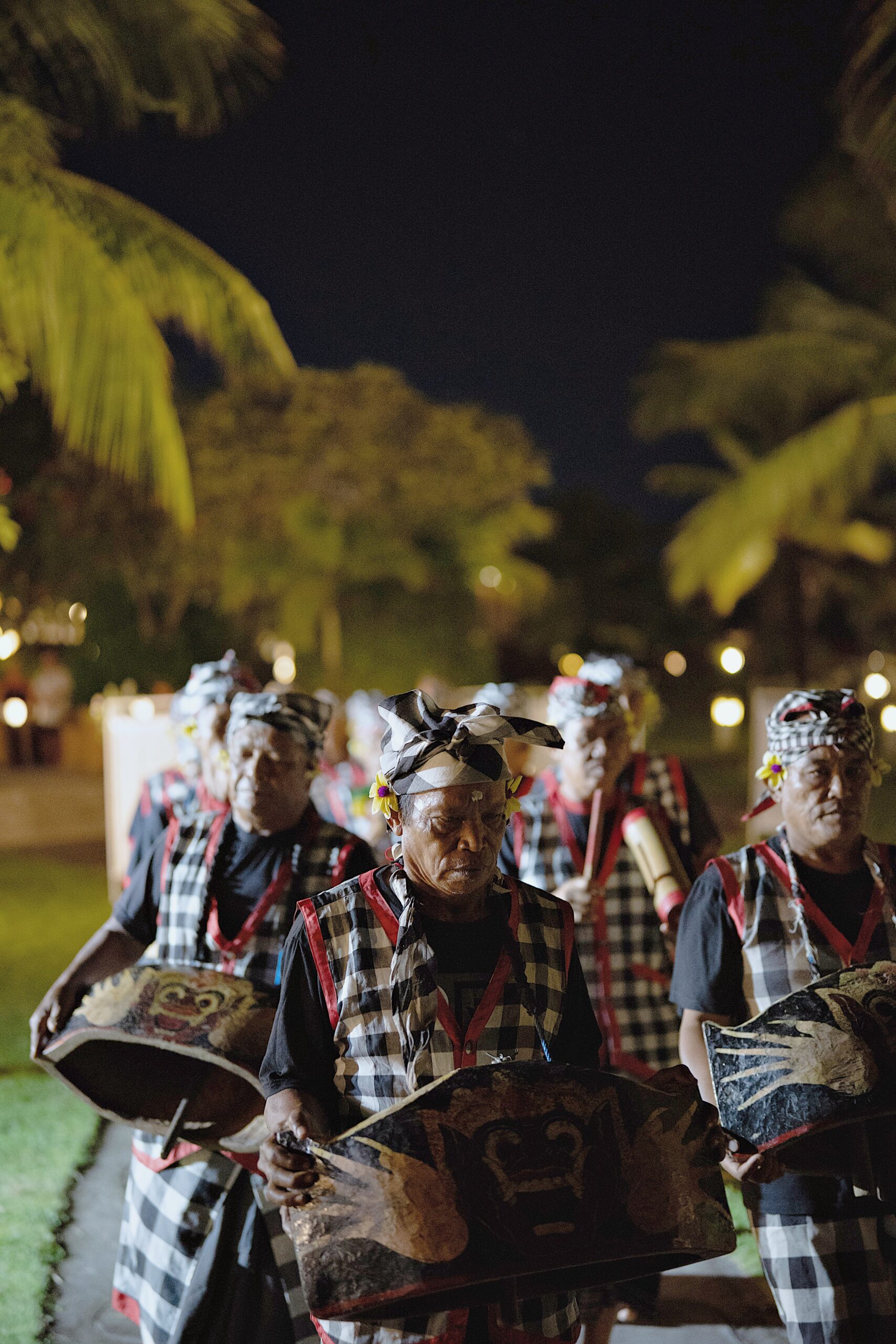
The Saput Poleng represents this duality. The white squares symbolize the light/positive, and the black squares symbolize the dark/negative. By wrapping an object in this cloth, the Balinese are not trying to banish the dark; they are acknowledging that both must exist side-by-side.
The goal of life in Bali is not perfection, but Harmony. The cloth is a constant reminder that we must respect and balance both the light and the dark energies in the world.
Why Trees and Statues?
You won’t see every tree wearing a Saput Poleng. It is reserved for specific places that are considered energetically powerful.
- The Guardians When you see the cloth on a statue at a gate (like the ones guarding the entrance to Merusaka), it signifies that the statue is an active guardian. The cloth “activates” the spirit within, asking it to protect the space by balancing any energy that enters—filtering out the bad and letting in the good.
- The Spirit Trees Large, ancient trees—especially Banyan trees—are believed to be dwelling places for spirits, both mischievous and benevolent. By wrapping the tree in Saput Poleng, the community is marking it as a sacred spot. It is a sign of respect, saying, “We acknowledge the spirit here, and we honor the balance of nature.”
- Visitor Etiquette: If you see a tree or statue wrapped in this cloth, treat it with the same respect you would a temple. It is considered a holy site.
The Grey Area (Literally)
Sometimes, if you look closely, you might see a variation called Poleng Sudamala, which includes Grey or even Red squares mixed in.
- Grey: Represents the transition between black and white, reminding us that life is rarely clear-cut.
- Red: Represents Brahma (the creator) and energy.
But the classic Black and White remains the most powerful symbol of the island’s stability.
Finding Harmony at Merusaka
The next time you walk through the grounds of Merusaka and see a frangipani tree or a stone guardian wrapped in checkered cloth, take a moment to pause.
It is more than just fabric. It is a silent teacher. It reminds us that a perfect holiday—and a perfect life—isn’t about ignoring the shadows, but about finding a beautiful balance between relaxation and adventure, stillness and energy, day and night.