Category Archives: Sustainablity

Getting Around Bali Easily With Convenient E-Ride Transportation

A Merusaka Sustainability Guide

Bali is one of the most captivating destinations in the world, but getting around it has long come with an environmental cost. With millions of petrol-powered vehicles navigating the island’s roads each day, transportation has historically been one of Bali’s biggest contributors to carbon emissions and air pollution. The good news? That story is changing, and changing fast.

Sustainability is central to everything we do. From our Boemi Merusaka Organic Garden and smart energy systems to our regular beach clean-ups at Mengiat Beach, our Sustainability Programme reflects a genuine commitment to protecting this island we call home. We believe that commitment extends beyond our resort, including to how our guests choose to explore Bali.

At Merusaka, we don’t just encourage greener travel; we make it easy. Our concierge team is ready to arrange electric transfers, recommend trusted e-ride operators, and help you plan every journey from the resort with sustainability in mind. Think of us as your personal green mobility guide for the island.

Electric rides and e-ride transportation are no longer a niche novelty in Bali. In 2025 and 2026, dedicated electric taxi services, app-based EV fleets, electric scooter rentals, and guided e-bike tours have arrived in earnest, offering visitors a cleaner, quieter, and genuinely rewarding way to see the island. This guide covers everything you need to know.
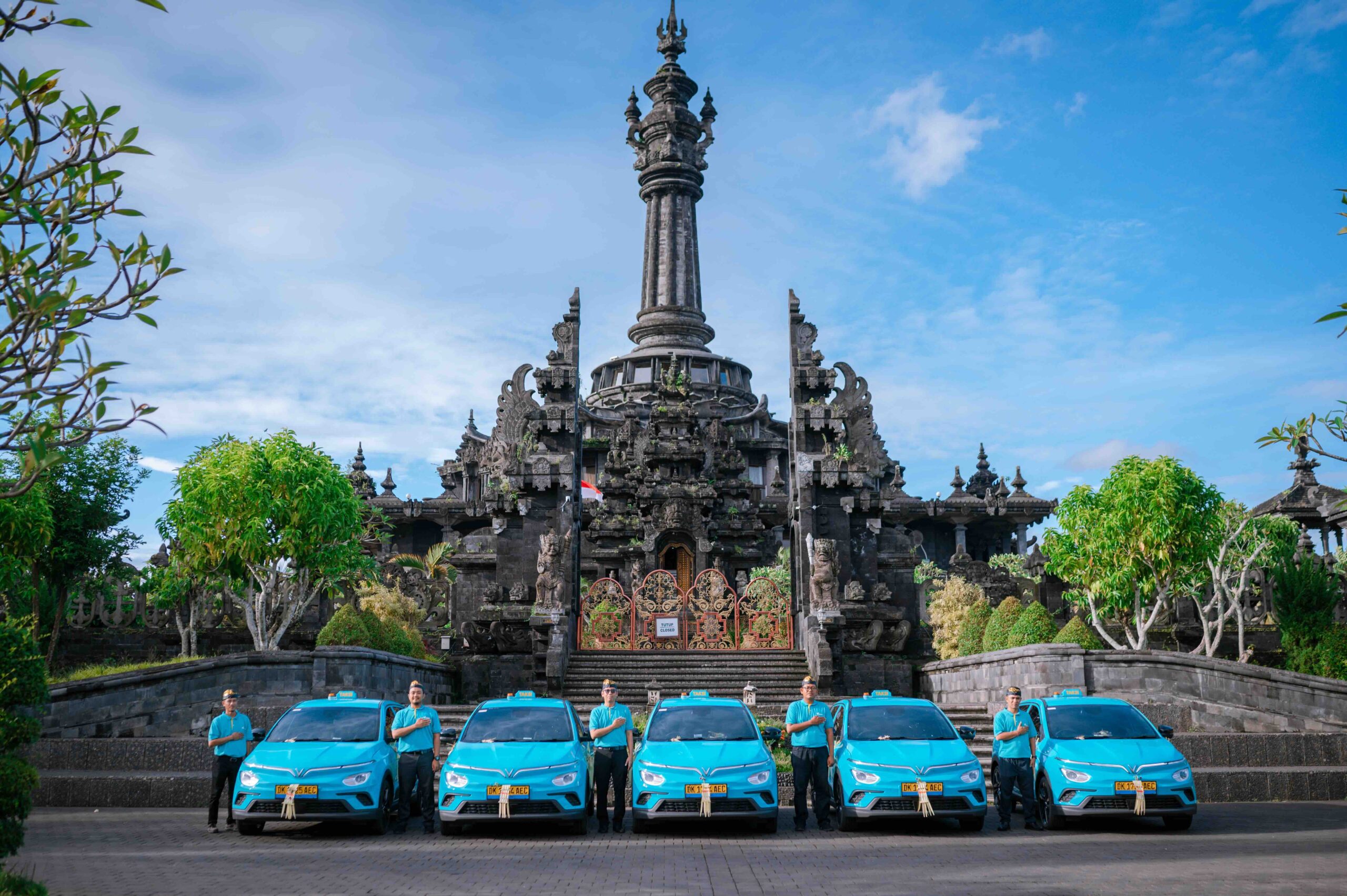


Green SM: Bali’s Newest All-Electric Taxi

The most exciting newcomer to Bali’s transport scene is Green SM, and it is very fresh news. Green SM officially launched operations in Bali on 27 February 2026 through a strategic partnership with Taksi Komotra, introducing an all-electric taxi service to support the island’s sustainable tourism and urban mobility agenda.

Under the partnership, Green SM provides the technology platform, all-electric vehicle fleet, and driver development system, while Taksi Komotra, a Bali cooperative with roots dating back to 1993, contributes its established local expertise and island-wide network. It is a compelling combination: international EV innovation grounded in genuine local knowledge.

The fleet runs entirely on VinFast electric vehicles, eliminating exhaust emissions and fuel combustion, with vehicles maintained under strict technical and safety protocols. Drivers are trained as professional green mobility ambassadors, guided by five core values: Respect, Professionalism, Dedication, Discipline, and a clear career pathway with stable income. Every ride feels intentional and well-governed.

You can book Green SM directly through the Green SM app (available on iOS and Android) or by calling their consumer hotline: 14068. You can also visit their website at id.greensm.com to learn more.

Look out for their signature cyan green vehicles on Bali’s roads. They are easy to spot, and a very welcome sight.

Tip: As a newly launched service, Green SM’s fleet coverage is actively growing. They are an excellent choice for transfers in and around Denpasar, South Bali, and the Nusa Dua corridor. Our concierge team can advise on current coverage for your specific journey.

E-Bluebird: Indonesia’s Trusted Electric Taxi

For a well-established electric car experience in Bali, E-Bluebird remains a gold standard option. Bluebird Group, Indonesia’s most trusted taxi brand since 1972, pioneered the country’s first electric taxi fleet and has steadily expanded its EV offering in Bali with a fleet of BYD electric vehicles.

You can book via the MyBluebird app (available on iOS and Android) or find the dedicated E-Bluebird booth at Ngurah Rai International Airport, which is a very convenient option if you want to start your Bali trip green from the very moment you land.

The app displays upfront pricing before you confirm your booking, so there are no surprises. Bluebird also runs a “One Ride, One Seed” tree-planting initiative in partnership with WWF Indonesia, adding another layer of environmental meaning to every journey.

Tip: Always confirm you are in an official Bluebird vehicle by checking for the blue bird logo and the fleet code on the windshield, for example “VV-1234”, to avoid imitation drivers.


Gojek and Grab: EV Bikes Within Your Favourite Apps

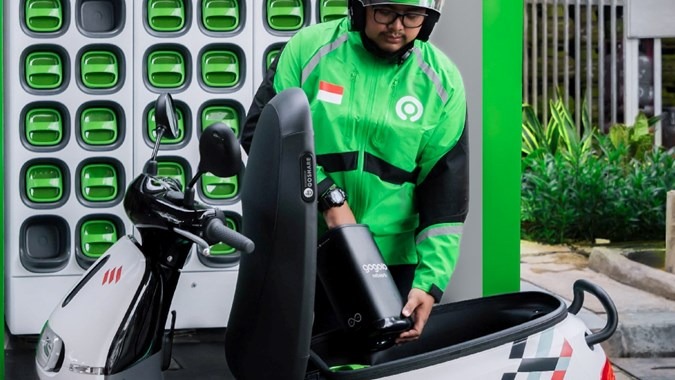
If you already use Gojek or Grab during your stay, and many of our guests do, you may already be riding electric without even realising it. Both platforms are actively rolling out electric motorbikes to their driver fleets across Bali as part of major national sustainability commitments. Gojek has set a target to transition its entire fleet to EVs by 2030, and both apps have been distributing electric bikes to driver-partners at scale across the island.

When you book a GoRide or GrabBike, there is a growing chance your driver will arrive on an e-bike. The experience is seamless from your side: same app, same booking process, same pricing. The difference is a noticeably quieter and smoother ride, and the knowledge that your trip produced zero tailpipe emissions.

No extra steps are needed. Simply book as normal, and let the greener ride come to you.

For a full walkthrough on using Gojek and Grab in Bali, including payment options and pickup tips, see our companion guide: Getting Around Bali Easily: Your Guide to Using Gojek, Grab and Ojeks.
Electric Scooter Rentals: Freedom to Explore at Your Own Pace

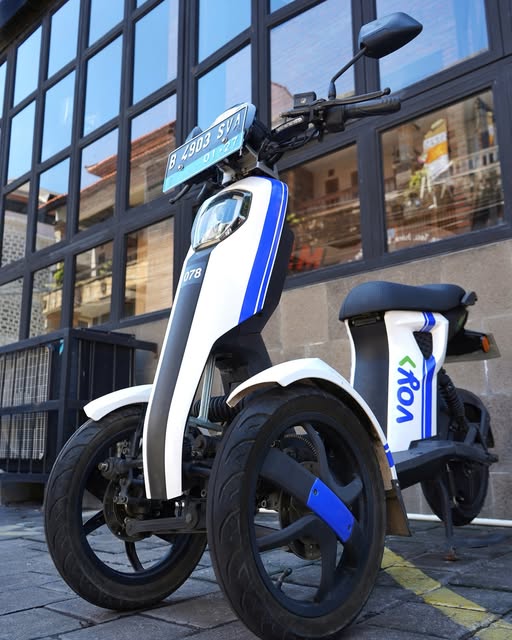
For guests who love the independence of self-riding, electric scooter rentals offer a clean and practical alternative to conventional petrol bikes. Dedicated e-scooter hire operators have been growing across South Bali, with options increasingly available in and around the Nusa Dua area.

NoaBike is one of the most recognised e-scooter rental providers in Bali, offering a fleet of well-maintained electric vehicles for daily hire at rates comparable to conventional scooters. Hotel and villa delivery can often be arranged, making it easy to pick up your e-scooter directly from Merusaka.

A few important things to keep in mind before renting:

Licensing: A valid home-country driving licence is required. We also strongly recommend obtaining an International Driving Permit (IDP) before your trip, as Indonesian traffic police may ask for one.

Range: Most electric scooters in Bali offer a range of around 50 to 120 km per charge, which comfortably covers a day trip around South Bali. Confirm the range with your rental operator and plan your route accordingly.

Helmet: Always wear the helmet provided and fasten the strap. This is a legal requirement and the right thing to do for your own safety.

Insurance: Check your travel insurance policy carefully before renting. Many standard policies do not cover motorbike accidents if you do not hold a valid motorcycle licence.

Our concierge team is happy to recommend current, trusted e-scooter rental operators near the resort. Just ask at the front desk.


E-Bike and Electric Cycling Tours: Bali at the Perfect Pace

For guests who want to experience Bali’s landscapes slowly and at eye level, without the heat and effort of conventional cycling, electric-assisted bicycle (e-bike) tours offer a wonderful middle ground. Pedal-assist technology provides support when you need it most, whether on hills, longer stretches, or during the warm midday hours, so you can focus on what is around you rather than the effort of getting there.

Popular routes for e-bike tours in Bali include the emerald rice terraces and traditional villages around Ubud, the scenic coastal paths of the Bukit Peninsula, and the quieter lanes winding through Jimbaran and the areas surrounding Nusa Dua. It is one of the most immersive ways to experience rural Bali, passing temple gateways, roadside shrines, and working rice paddies at a pace slow enough to genuinely appreciate them.

Most e-bike tours in Bali are small-group, guided experiences lasting between two and four hours, and the majority of operators offer hotel pickup from Nusa Dua. Ask our concierge team for recommendations tailored to the part of the island you would like to explore.


Why We Encourage Our Guests to Choose Electric

We know that when you are on holiday, convenience and comfort come first. That is exactly why we feel confident recommending e-rides. The electric options available in Bali today are not a compromise; in many cases, they are genuinely the better experience.

Here is why we would love for you to make the switch during your stay:

It’s quieter, and that matters in Bali. Part of what makes Bali magical is the sound of it: temple bells, gamelan music drifting through the air, the rustle of palm trees. An electric vehicle moves through the island’s soundscape rather than cutting across it. The silence of an e-ride is itself a gift.

It’s comfortable and often more affordable. Electric taxis like Green SM and E-Bluebird offer premium interiors with smooth, vibration-free rides. With upfront pricing through their apps, you always know what you are paying before you travel. No negotiating, no surprises.

Every ride adds up. Bali receives millions of visitors every year. If even a fraction of those visitors choose electric transport during their stay, the collective impact on the island’s air quality and carbon footprint becomes genuinely significant. Your individual choice is part of something much bigger.

It aligns with the spirit of Bali itself. Balinese philosophy is rooted in Tri Hita Karana, the concept of harmony between people, nature, and the divine. Choosing to travel in a way that respects the natural environment is not just an eco-conscious decision; it is a deeply Balinese one. It is a way of honouring the island that is welcoming you.

And you will have a story to tell. Being among the first guests to ride Green SM, launched in Bali just weeks ago, or gliding silently through Ubud’s rice terraces on an e-bike, is the kind of travel memory worth carrying home.


Merusaka’s E-Ride Quick Reference

Option Best For How to Book
Green SM Comfortable electric car, city and resort transfers Green SM app or call 14068
E-Bluebird Trusted electric taxi, airport pickup MyBluebird app or airport booth
Gojek / Grab EV Bike Quick solo trips, navigating traffic Gojek or Grab app as normal
E-Scooter Rental Full-day freedom and self-exploration Ask Merusaka concierge
E-Bike Tour Scenic guided rides through rice terraces and coastline Ask Merusaka concierge

Our concierge team can arrange or recommend all of the above.
Simply ask at the front desk, We’d love to assist you anytime …

Travel beautifully. Travel responsibly. Travel electric.
 

We Stand for Every Child

Merusaka’s commitment to protecting children at our home.


Bali is more than a destination. For millions of people (visitors and locals alike) it is a place of beauty, warmth, and genuine human connection. At Merusaka Nusa Dua, we are privileged to be part of this island’s story. And with that privilege comes a responsibility we take deeply to heart: the protection and dignity of every child in our community.

This is not a policy document. It is a statement of who we are.

A Resort Rooted in Community

Merusaka was built on the belief that great hospitality goes hand in hand with genuine care for the place and people around us. Nusa Dua is not just our address, it is our home. The children who grow up here, who play on these streets and dream of their futures, are part of the community we serve every single day.

That’s why Merusaka actively supports efforts to combat the sexual exploitation of children, a cause that sits at the intersection of child welfare, community dignity, and responsible tourism. We believe that a truly welcoming destination is, above all, a safe one.

Why This Matters to Us

Child sexual exploitation is a reality that exists in tourist destinations around the world, including here in Bali. It thrives in silence and in the shadows of indifference. The most powerful thing a community can do whether a family, a neighborhood, or a resort is to simply refuse to look away.

As one of Bali’s leading hospitality properties, Merusaka has both the reach and the responsibility to help change the culture around this issue. We don’t see this as an obligation. We see it as a natural expression of our values: care, integrity, and a deep respect for every human being who crosses our path.


“Every child deserves a childhood free from exploitation and abuse.”
Malala Yousafzai (globally respected voice on child protection)

Nature Tourism Etiquette in Bali

A Guide to Visiting Bali’s Natural Wonders with Care and Respect

Bali is one of the world’s most treasured natural destinations, a living tapestry of volcanic peaks, ancient rice terraces, sacred forests, and turquoise coastlines. At Merusaka, our love for nature runs deep. We believe that every visitor carries a responsibility to protect the extraordinary landscapes they come to experience. This guide is our invitation to you: explore Bali with curiosity, but tread with gentleness.

Tourism is one of Bali’s greatest gifts and its most pressing challenge. With millions of visitors arriving each year, even small acts of carelessness can compound into irreversible damage. The good news? Mindful behavior costs nothing, and the rewards, for both the environment and the traveler, are immeasurable.


1. Respect the Sacredness of Nature

For the Balinese people, nature is not simply scenery, it is sacred. Mountains, forests, rivers, and the sea are regarded as the dwelling places of gods and ancestral spirits. This profound relationship between people and the natural world has shaped Balinese culture for thousands of years.

What this means for visitors:

✦      Dress modestly when entering nature areas near temples or sacred sites. Sarongs are often required and are widely available to borrow or purchase.
✦      Do not climb or touch sacred trees, shrines, or rock formations marked with offerings (canang sari). These are places of active worship.
✦      Maintain a respectful silence during traditional ceremonies that may be taking place near natural sites, such as those at rivers or beaches.
✦      Ask local guides before photographing rituals or sacred spaces. Permission matters.
      In respect of local Balinese traditions, women who are currently menstruating are kindly requested not to enter temple areas.


Merusaka Insight

The Balinese concept of Tri Hita Karana — harmony between humans, nature, and the divine — underpins daily life. As a visitor, you become part of this living philosophy the moment you step onto the island.


2. Leave No Trace

Bali’s natural spaces face immense pressure from plastic waste and littering. Beaches, rice terraces, and jungle paths are often strewn with single-use plastics — a problem that harms wildlife, contaminates waterways, and diminishes the beauty that visitors come to see.

Your commitment:

✦      Carry a reusable water bottle and refuse single-use plastics wherever possible. Many eco-conscious warungs and hotels in Bali now offer refill stations.
✦      Pack out everything you bring in. If you hike to a waterfall or trek through rice paddies, leave the spot cleaner than you found it.
✦      Never discard waste in rivers, on beaches, or in forests, even biodegradable waste can disrupt local ecosystems.
✦      Join a local beach clean-up if your schedule allows. Organizations across Bali welcome volunteer participation.
✦      Avoid releasing balloons or sky lanterns near natural areas, as they endanger wildlife and contribute to pollution.


3. Stay on Marked Trails and Paths

The desire to find the perfect photo or discover an untouched corner of Bali is understandable but venturing off designated paths causes real harm. Trampling vegetation destroys habitats, accelerates soil erosion, and can disturb nesting wildlife.

✦      Always follow marked trails in forested areas, including the Sacred Monkey Forest in Ubud, the trekking paths on Mount Batur, and coastal cliff walks.
✦      In rice terrace areas such as Tegallalang and Jatiluwih, stick to the narrow earthen paths between paddies. Stepping onto the terraces damages crops that local farming families depend on for their livelihood.
✦      Heed warning signs and barriers. They exist to protect both you and the environment.
✦      If you are unsure of the right path, hire a certified local guide. They know the terrain intimately and their employment supports the local community.


4. Wildlife: Observe, Never Interfere

Bali is home to a rich diversity of wildlife, from the endangered Bali Starling to macaques, sea turtles, manta rays, and rare orchids. Human interference, even when well-intentioned, can cause lasting harm.

         At land-based nature sites:

✦      Never feed wild animals, including the monkeys at the Sacred Monkey Forest. Human food disrupts their natural diet, encourages aggressive behavior, and creates unhealthy dependency.
✦      Do not attempt to touch, pick up, or photograph wild animals at close range. This causes stress and can provoke defensive reactions.
✦      Avoid purchasing souvenirs made from wildlife products, including coral, shells, turtle shells, or feathers. Many are protected by Indonesian law.

In the ocean:

✦      When snorkeling or diving, never stand on, touch, or collect coral. Coral reefs take decades to grow and are destroyed in seconds.
✦      Maintain a respectful distance from sea turtles, manta rays, and reef sharks. These species are protected, and interaction causes stress.
✦      Use reef-safe sunscreen. Conventional sunscreens contain chemicals that bleach and kill coral ecosystems.
✦      If you visit a turtle conservation program, choose reputable organizations that prioritize animal welfare over tourist entertainment.


5. Water: Bali’s Most Precious Resource

Despite appearing lush and abundant, Bali faces serious freshwater challenges. Rapid tourism growth has strained water supplies, particularly in the south of the island. Rivers and springs that were once clean and vibrant are increasingly polluted.

✦      Shower rather than bathe to conserve water during your stay.
✦      Reuse hotel towels and linens — request that they not be changed daily.
✦      Never wash clothes, dishes, or vehicles in rivers or natural springs. These are often connected to sacred water sources.
✦      Be thoughtful about activities that use large quantities of water, including certain spa treatments or infinity pool resorts in drought-prone areas.


A Note on Sacred Springs

Many of Bali’s rivers flow from purification temples (pura tirta). The water that irrigates the rice fields and sustains communities downstream begins its journey at these sacred sources. Keeping rivers clean is an act of cultural as well as environmental respect.


6. Support Local and Sustainable Tourism

One of the most powerful ways to protect Bali’s natural environment is to direct your spending toward businesses and guides who actively care for it. Sustainable tourism creates economic incentives for conservation, ensuring that local communities benefit from protecting — rather than exploiting — the natural world.

✦      Choose locally owned accommodations, restaurants, and tour operators over large international chains.
✦      Hire certified local guides for nature treks. They provide authentic experiences, and their income is tied to keeping natural areas pristine.
✦      Purchase handicrafts directly from artisans and cooperatives, rather than mass-produced items at tourist markets.
✦      Ask your accommodation whether they practice composting, use solar energy, or source food locally and support those that do.
✦      Avoid attractions that exploit animals for entertainment, such as elephant rides, bird performances, or photo opportunities with sedated wildlife.


7. Be Mindful of Your Carbon Footprint

Getting to Bali involves a long-haul flight for most visitors  a significant carbon cost. While this cannot be entirely avoided, conscious choices during your stay can help reduce your overall environmental impact.

✦      Rent bicycles or use ride-sharing apps rather than private cars for short journeys.
✦      Choose experiences that involve human-powered exploration hiking, cycling, paddling  over motorized alternatives where possible.
✦      Avoid unnecessary helicopter tours or speedboat excursions to fragile coastal areas.
✦      Consider carbon offset programs when booking your flights. Several reputable organizations direct offset funds toward reforestation projects in Indonesia.


8. Photography and Social Media

In the age of social media, Bali’s most beautiful natural spots can become overwhelmed almost overnight once a photograph goes viral. The pressure to capture the perfect shot has led to fence-jumping, trespassing, and the degradation of fragile sites.

✦      Do not trespass on private land or restricted areas for photographs, even if you have seen others do so.
✦      Avoid geotagging the exact locations of fragile or lesser-known natural sites on social media. This can rapidly lead to overcrowding and damage.
✦      Be patient and courteous at popular viewpoints. Crowding and rushing for the best angle disturbs both other visitors and the local environment.
✦      When sharing photographs, include a message about responsible tourism. Your platform can be a force for good.


Think Before You Tag

Several of Bali’s hidden waterfalls and sacred spots have been significantly damaged after going viral. Consider whether sharing a precise location truly serves the place — or whether some beauty is better kept as a discovery.


A Final Word from Merusaka

Nature does not need tourists. But it can benefit from the right kind of traveler — one who arrives with open eyes, a humble heart, and a genuine commitment to leaving the world better than they found it.

At Merusaka, we believe that the most meaningful travel experiences are those rooted in respect: for the land, for the people who call it home, and for the generations who will inherit it after us. Bali has given the world extraordinary beauty. The least we can do is protect it.

“Loving Bali means protecting Bali.”

Automated Air Conditioning by SensorFlow

Merusaka Nusa Dua partnership with SensorFlow dedicated to creating a sustainable future. SensorFlow’s brings you smart air conditioning that adjusts based on occupancy, reducing energy waste without compromising your comfort. When you’re not in your room, the system shifts to an energy-efficient mode. Upon your return, it automatically resets to your preferred settings.

This seamless integration of technology ensures you enjoy a comfortable stay while helping us protect the environment.

Boemi Merusaka

Nestled within Merusaka Nusa Dua, Boemi Merusaka is more than just a garden. It’s our commitment to eco-friendly agriculture and sustainability.

We cultivate a vibrant array of organic produce, using homemade fertilizer crafted from kitchen and garden waste. This closed-loop system not only reduces waste but also enriches our soil and our plates.

Our garden’s bounty, from juicy fruits to fragrant spices, is a star in our garden-to-table culinary creations. Experience the freshness and the flavor that only comes from produce grown with care and respect for nature.

Beach Cleaning

Nestled along the sun-kissed shores of Nusa Dua, Merusaka is more than a resort; it’s a guardian of coastal harmony.

Collaborating with the International Coastal Cleanup, locals, schoolchildren, and leaders as our allies every day, we meticulously restore the shoreline, ensuring every wave meets untouched sands as completely as possible, echoing our commitment to preserving nature’s masterpiece at Mengiat Beach.

Food Waste Solution by Magi Farm

Merusaka Nusa Dua generates around 100 kilograms of food waste every day. Through our partnership with Magi Farm, we’ve introduced the remarkable Black Soldier Fly maggot. These eco-friendly creatures not only consume twice their weight in waste daily and also produce nutrient-rich pellets ideal for fertilizing our gardens. With 20 boxes in rotation every week, each capable of processing up to 2 kilograms of waste per day.We’re actively reducing our environmental footprint and paving the way for a greener future.